
Seasonal care
Dormant season is often useful, but safety concerns do not always wait.
For many Pennsylvania trees, late winter pruning can be a good option because branch structure is easier to see and the tree is not actively pushing new leaves. But broken, dead, or hanging limbs near people, roofs, driveways, and walkways may need attention as soon as they are noticed.
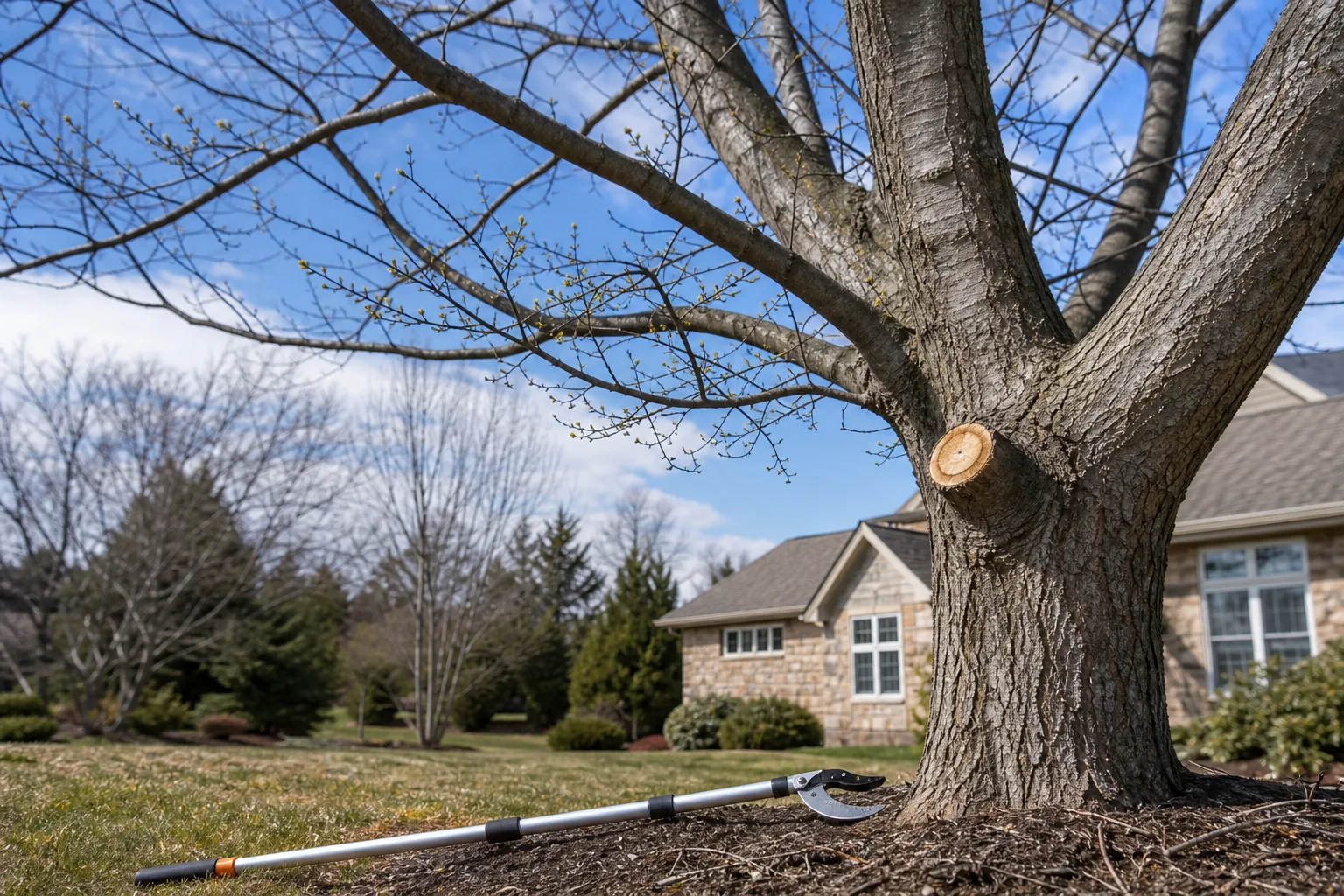
Common pruning timing goals
- Late winter: Often useful for structure, deadwood, and visibility before spring growth.
- Spring: Good for reviewing winter damage and new growth concerns.
- Summer: Helpful for clearance, weight reduction, and seeing full canopy density.
- Fall: A good time to address deadwood and storm readiness before winter weather.
- Any season: Dead, broken, hanging, or hazardous limbs may need prompt attention.
When pruning may be the right next step
Clearance
Branches near roofs, walkways, driveways, signs, or parking areas may need selective trimming.
Structure
Crossing, rubbing, crowded, or weak limbs can be addressed before they become larger issues.
Risk reduction
Deadwood, storm-stressed limbs, and overloaded branches should be evaluated for safer options.
Tree pruning FAQs
What is the best time to prune trees in Pennsylvania?
For many trees, dormant-season pruning in late winter is a good time because structure is easier to see and the tree is not actively pushing new growth. Timing still depends on species, condition, and pruning goals.
Can damaged branches be pruned any time?
Dead, broken, hanging, or hazardous branches can often be addressed when they are found, especially when they threaten people, structures, access, or vehicles.
Is topping a tree the same as pruning?
No. Topping removes large portions of canopy without supporting healthy structure. Selective pruning targets specific branches for clearance, structure, risk reduction, and long-term tree health.