
Cost factors
A good estimate starts with the tree and the site around it.
Two trees of the same height can require very different removal approaches. A tree in an open yard is different from one leaning over a roof, fence, driveway, service line, or neighboring property. Guardian Tree Company looks at the whole work area before recommending the safest removal path.
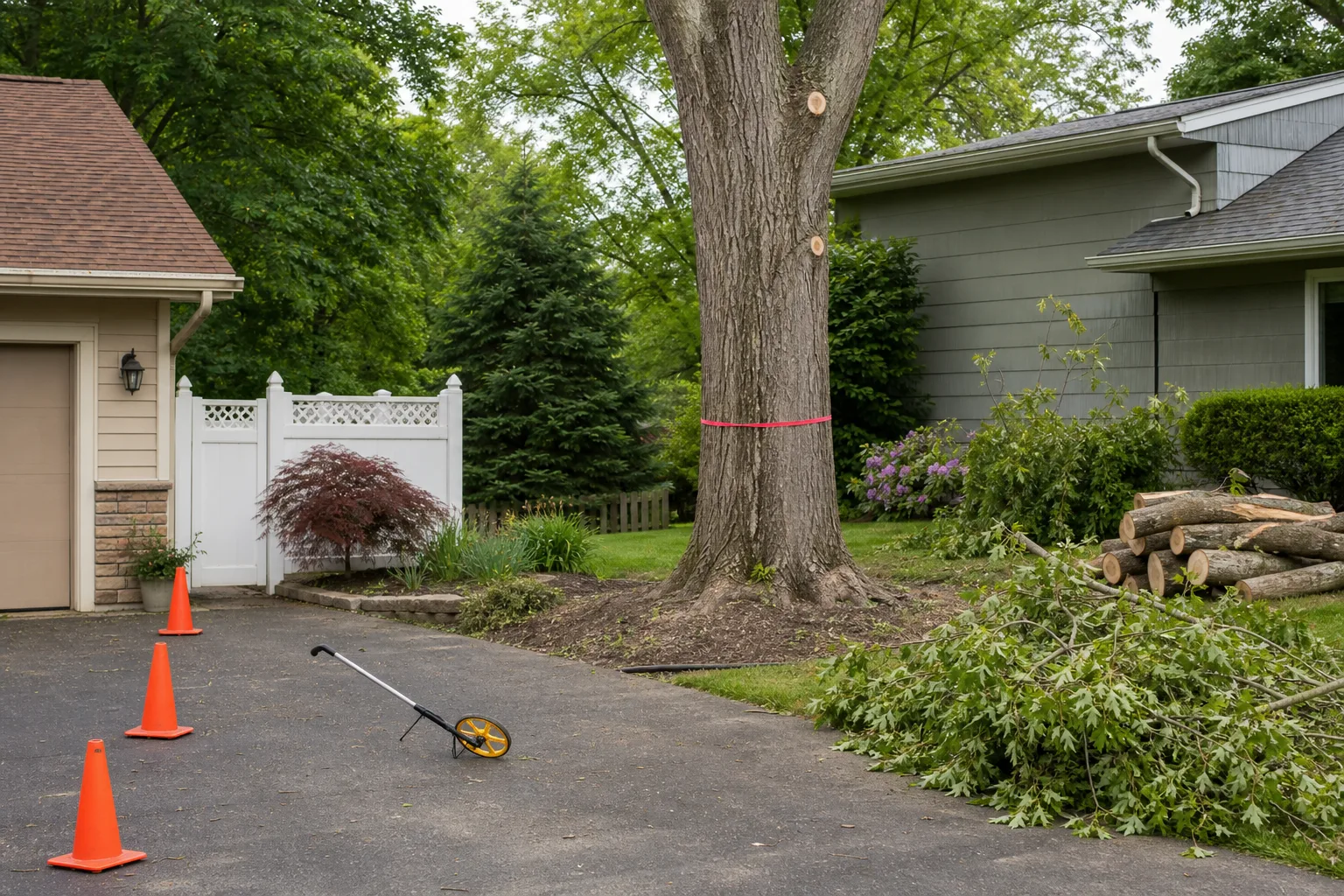
Factors that change a tree removal estimate
- Tree size and spread: Taller trees and broad canopies often take more time and care.
- Tree condition: Dead, hollow, cracked, or storm-damaged trees can be less predictable.
- Access: Tight gates, slopes, fences, landscaping, and limited equipment access can affect the job.
- Nearby targets: Homes, garages, sheds, wires, sidewalks, cars, and neighboring property change how the job is handled.
- Cleanup expectations: Debris hauling, wood handling, and final site cleanup should be clear before work begins.
- Urgency: 24/7 emergency tree service may involve immediate safety and access priorities before final cleanup.
How to prepare for an estimate
Show the whole tree
Take safe photos from the ground that show the full tree, trunk base, and canopy.
Show nearby targets
Include roof lines, driveways, fences, wires, sheds, access points, and anything under the canopy.
Describe the concern
Mention dead limbs, cracks, storm damage, lean, blocked access, or why removal is being considered.
Tree removal cost FAQs
What affects tree removal cost?
Tree removal cost depends on tree size, condition, access, lean, nearby structures, rigging needs, cleanup, debris hauling, stump needs, and whether the work is urgent after storm damage.
Can photos help with a tree removal estimate?
Yes. Photos of the whole tree, trunk base, canopy, nearby structures, access points, and problem areas can help clarify the removal scope before a site visit.
Is emergency tree removal priced differently?
Emergency tree work can involve additional risk, timing, access, and safety constraints. A 24/7 emergency request should focus first on safety and access, then cleanup and final removal decisions.