
Safety first
Do not stand under damaged limbs to inspect the tree.
Storm-damaged branches can shift after the weather passes. Limbs may be cracked, suspended, tensioned, or resting on another branch or structure. Keep the area clear and observe from a safe distance.
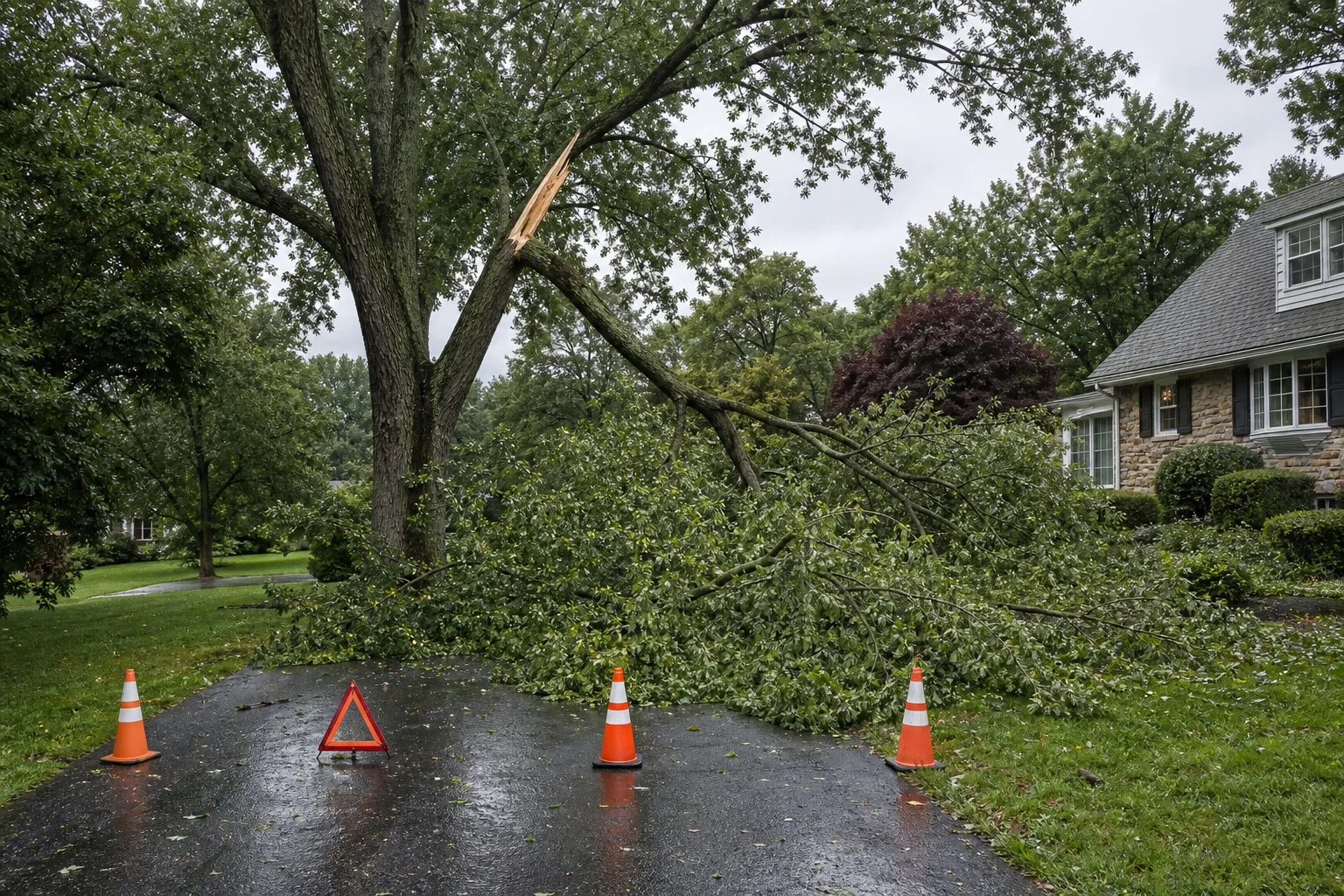
First steps after storm damage
- Keep distance: Move people, pets, and vehicles away from the damaged area.
- Watch for wires: Stay away from trees or limbs touching wires and contact the utility or emergency services when needed.
- Check access: Note whether a driveway, sidewalk, entrance, road, or parking area is blocked.
- Take safe photos: From the ground, capture the full tree, damaged limbs, trunk base, and nearby targets.
- Request help: Use 24/7 emergency tree service when there are hanging limbs, split trunks, or immediate hazards.
What the next step may be
Emergency triage
Urgent hazards, blocked access, and limbs on structures are handled first.
Pruning
Some storm damage can be corrected with selective pruning once the site is safe.
Removal decisions
Trees with severe splitting, failed structure, or major instability may need removal.
Storm damaged tree FAQs
What should I do after storm damage to a tree?
Keep people away from damaged limbs, avoid wires, document the damage from a safe distance, note whether access is blocked, and request emergency tree service when there are hanging limbs, split trunks, or immediate hazards.
Should I cut storm-damaged branches myself?
Avoid cutting large, suspended, tensioned, or overhead limbs yourself. Storm-damaged branches can shift suddenly, especially when they are resting on other limbs or structures.
When is storm damage an emergency?
Storm damage may be an emergency when limbs are hanging, access is blocked, a tree or branch is on a structure, a trunk is split, or wires are involved. Stay away from wires and contact the utility or emergency services when needed.