After removal
Finish the tree removal with a cleaner, more usable yard.
A leftover stump can make mowing harder, interrupt a landscaping plan, create a trip hazard, or keep a property looking unfinished after tree work. Stump grinding helps reduce the visible stump so the area can be cleaned up, leveled, mulched, reseeded, or prepared for a future use.
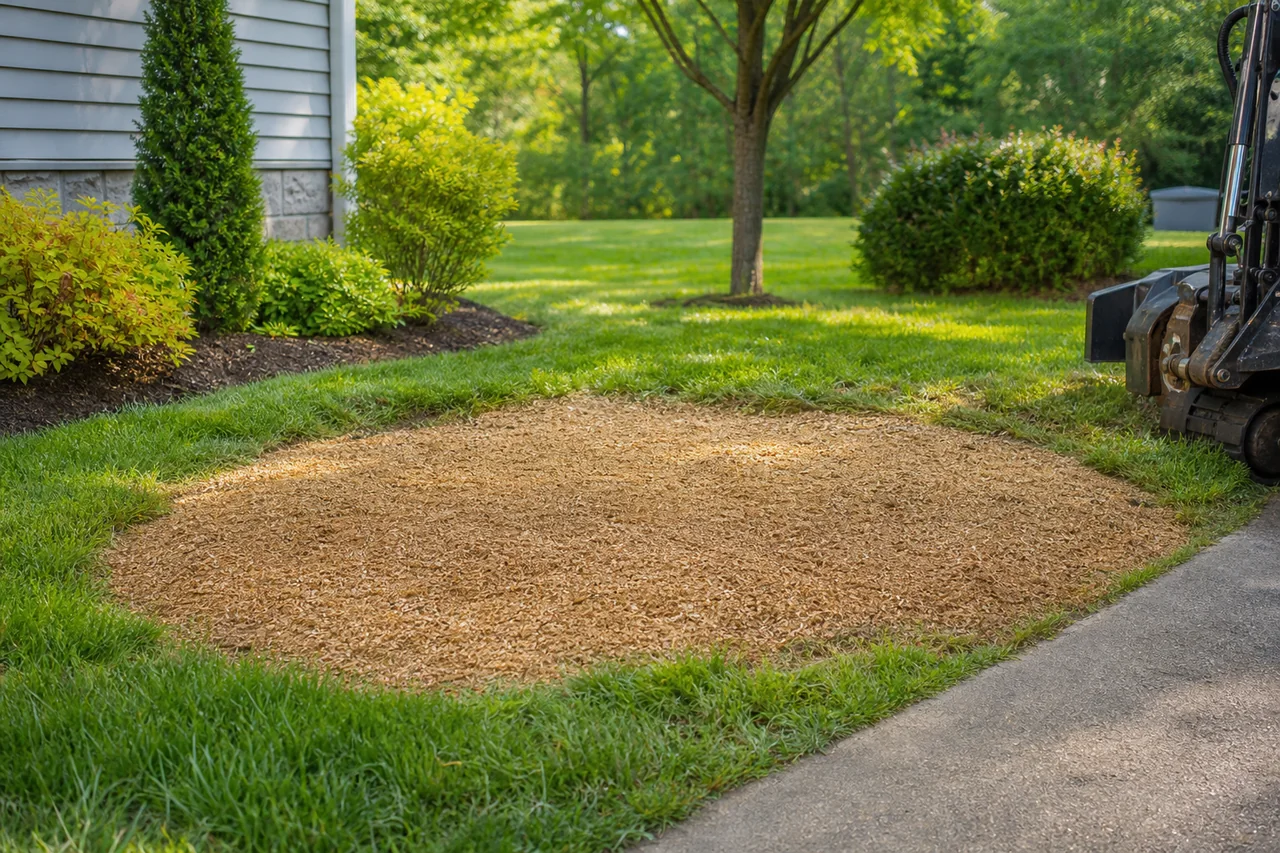
Assess the site
Review stump size, access, nearby hardscaping, utilities, grade, and what the area should become afterward.
Clarify the finish
Decide how stump grinding fits with removal, debris handling, chips, and cleanup expectations.
Restore the area
Use the cleared space for mowing, mulch, planting, turf repair, or a cleaner property edge.
What to decide before stump grinding
What should the area become?
The right finish depends on whether the space will be mowed, mulched, reseeded, repaired, or reused for another purpose.
What cleanup do you expect?
Ask how chips, surface roots, grade, and final cleanup should be handled so the result matches the yard plan.
Common reasons to request stump grinding
- A stump remains after tree removal and the yard still feels unfinished.
- The stump gets in the way of mowing, landscaping, fencing, or driveway access.
- Surface roots or stump flare interfere with the intended use of the space.
- The property owner wants a cleaner result after storm-damaged tree removal.
Stump grinding FAQs
When should a stump be ground?
Stump grinding is usually considered after tree removal when the remaining stump affects mowing, landscaping, replanting, driveway access, or the appearance of the property.
Can stump grinding be handled with tree removal?
Yes. Stump grinding can be discussed during the same estimate request as tree removal so cleanup and site restoration are clear from the start.
Does stump grinding remove the entire root system?
Stump grinding focuses on the visible stump and surrounding surface roots as appropriate for the site. It does not remove every underground root.