Assessment first
Before cutting, understand what the tree is showing you.
A tree health assessment helps separate routine care from urgent risk. Guardian Tree Company looks for visible signs of stress, deadwood, canopy thinning, structural defects, root-area concerns, storm damage, and clearance conflicts before recommending pruning, monitoring, removal, or urgent help.
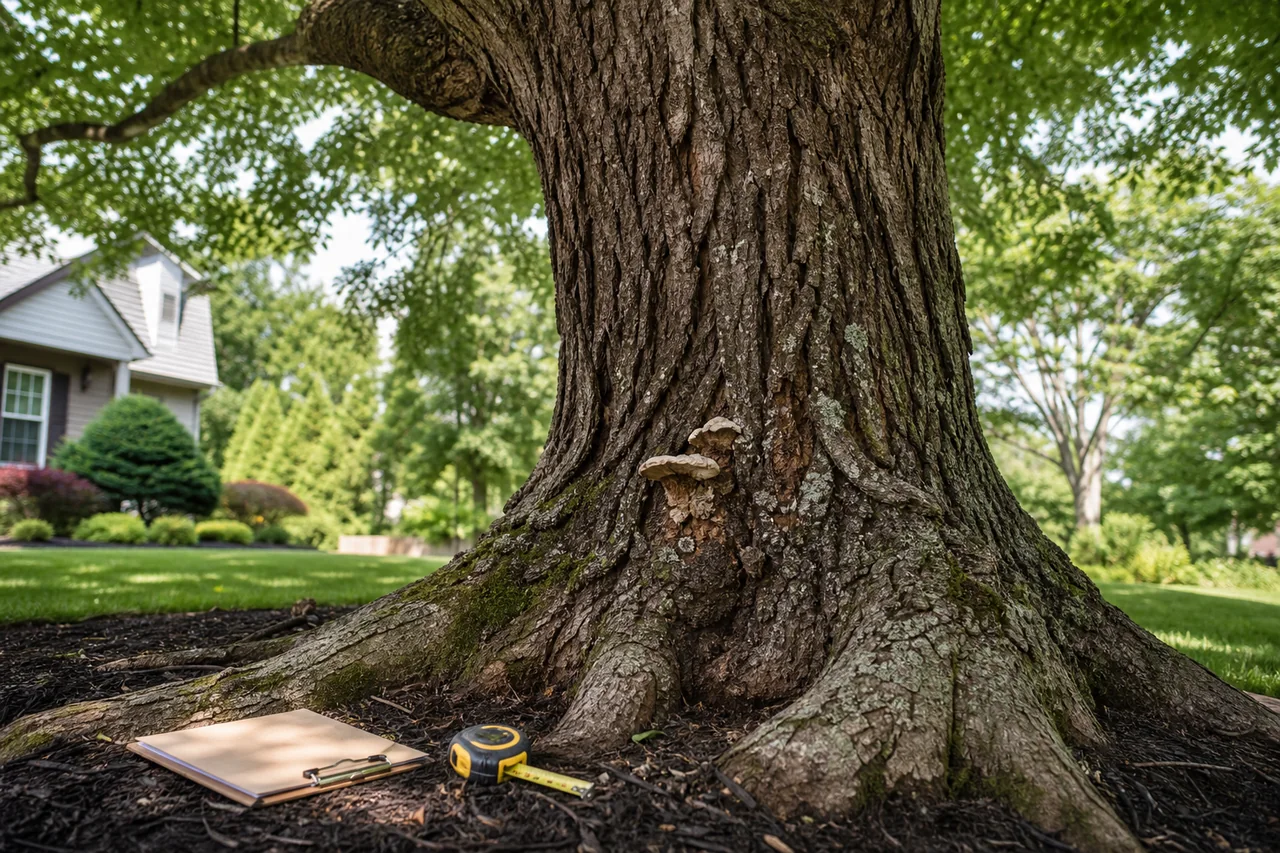
Common reasons to schedule a tree health check
- Dead limbs, thinning canopy, sparse leaves, or branch dieback
- Cracks, cavities, fungal growth, or decay near the trunk or root flare
- Sudden lean, exposed roots, lifted soil, or storm movement
- Pest activity, boring holes, unusual leaf spots, or bark changes
- Uncertainty about whether pruning can help or removal is safer
When an assessment helps most
Before removal feels obvious
Some trees can be improved with selective pruning or monitoring when the structure is still manageable.
When risk is changing
New lean, exposed roots, split limbs, decay, or storm movement should be looked at before the next storm adds stress.
What happens after the assessment
Observe the visible signs
The visit starts with canopy, trunk, root-area, nearby target, and access observations.
Choose the right service
The recommendation may point to pruning, monitoring, removal, or emergency triage.
Set expectations
You get clear context for timing, cleanup, safety concerns, and whether more specialized review is needed.
Tree health assessment FAQs
When should I request a tree health assessment?
Request a tree health assessment when you notice deadwood, thinning canopy, cracks, fungus, pest activity, sudden lean, storm stress, or uncertainty about whether a tree needs pruning or removal.
Can a tree health assessment prevent removal?
Sometimes. A practical assessment may show that selective pruning, monitoring, or care steps are appropriate. Trees with severe structural defects, decay, or failed roots may still need removal.
Is a damaged tree always an emergency?
No. Some damage can be scheduled, but hanging limbs, blocked access, split trunks, or trees touching structures or wires should be treated as urgent safety concerns.